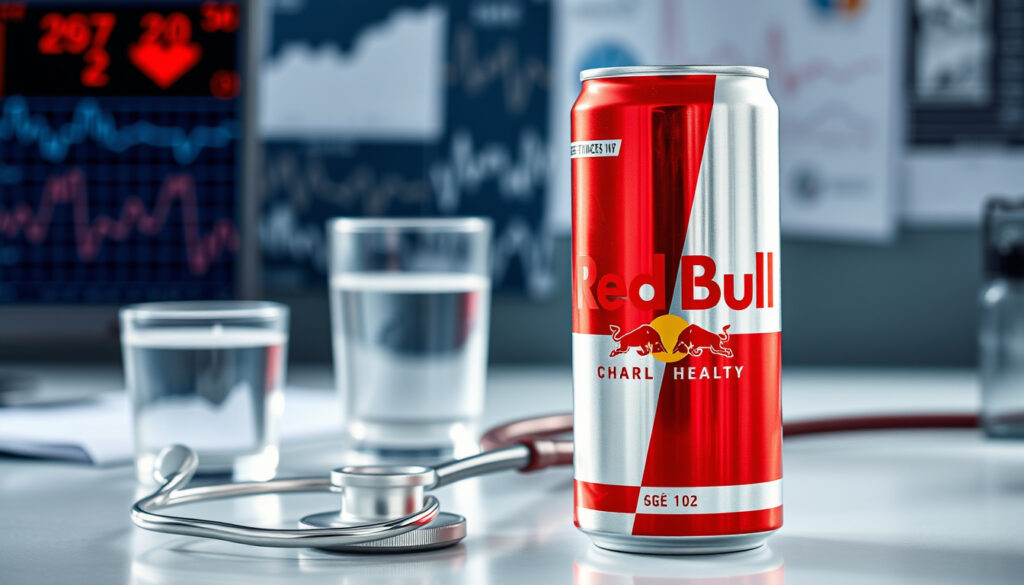
Is Red Bull Healthy? Ingredients, Effects, and Comparisons
Few people crack open a can of Red Bull without wondering what’s actually inside. That blend of caffeine, taurine, and sugar has powered late-night study sessions and extreme sports alike, but raises questions about long-term health.
Caffeine per 250ml: 80 mg · Sugar per 250ml: 27 g · Calories per 250ml: 110 · Global market share: 13% · Founded: 1987
Quick snapshot
- Energy drink brand founded in Austria in 1987 (Wikipedia (encyclopedia))
- Contains caffeine, taurine, B-group vitamins, and sugars (Red Bull (official ingredients list))
- 80 mg caffeine per 250 mL (Red Bull Portugal (product page))
- Caffeine: 80 mg per 250 mL (Red Bull Portugal)
- Taurine: 1000 mg per 250 mL (One Stop product sheet (retail specification))
- B-group vitamins: B3, B5, B6, B12 (Red Bull)
- Sugars: 27 g per 250 mL (Red Bull Switzerland (product page))
- Caffeine blocks adenosine receptors, reducing fatigue (UC Davis Nutrition (university fact sheet))
- Side effects may include insomnia, jitters, increased heart rate (FDA letter reprinted by UMD CLS (regulatory correspondence))
- Moderate consumption (one can) is safe for healthy adults (FDA letter)
- Not recommended for children, pregnant women, or caffeine-sensitive individuals (FDA letter)
- Coffee and tea provide caffeine with lower sugar (UC Davis Nutrition)
- Sugar-free Red Bull uses acesulfame K and aspartame (Wikipedia)
- Energy drinks contain much higher caffeine than sodas (FDA letter)
Here are the key facts about Red Bull.
| Founded | 1987 by Dietrich Mateschitz and Chaleo Yoovidhya |
| Headquarters | Fuschl am See, Austria |
| Caffeine per 250 ml | 80 mg |
| Sugar per 250 ml | 27 g |
| Calories per 250 ml | 110 |
| Global market share | 13% (2023) |
Is Red Bull a healthy energy drink?
Red Bull contains caffeine, taurine, B vitamins, and sugar. A 250 mL can delivers 80 mg of caffeine and 27 g of added sugar — about 7 teaspoons. While moderate consumption (one can) is generally safe for healthy adults, the high sugar content still raises concerns.
Does Red Bull have any health benefits?
- Improves reaction time and vigilance (UC Davis Nutrition)
- May increase endurance during exercise (UC Davis Nutrition)
- Quick source of energy for mental tasks (University Hospitals (health library))
Is it safe to drink Red Bull every day?
Daily consumption of one can is unlikely to cause harm in healthy adults, but the sugar and caffeine can add up. The American Academy of Pediatrics recommends against energy drinks for children and adolescents. For adults, the FDA letter notes that up to 400 mg of caffeine per day is generally considered safe — about 5 cans of Red Bull. But the sugar content (27 g per can) pushes the daily limit quickly.
The energy kick of Red Bull comes with a sugar load that can impact dental health and blood sugar. For daily use, the sugar-free version removes that risk — but substitutes artificial sweeteners.
The implication: moderate occasional use is safe, but regular consumption requires caution.
What exactly does Red Bull do?
How does caffeine affect the body?
- Caffeine blocks adenosine receptors, which reduces fatigue and increases alertness (UC Davis Nutrition)
- This effect is why Red Bull is commonly used to stay awake or focused
Role of taurine in energy drinks
- Taurine supports cardiovascular function and muscle performance (UC Davis Nutrition)
- Red Bull contains 1000 mg of taurine per 250 mL (One Stop product sheet)
B vitamins and energy metabolism
- B vitamins (B3, B5, B6, B12) help convert food into energy (Red Bull)
The combination of caffeine, taurine, and B vitamins creates a multi-pathway energy effect. But the primary driver remains caffeine — the other ingredients add marginal benefit.
What are the benefits of Red Bull?
Improved concentration and alertness
- Red Bull improves reaction time and vigilance (UC Davis Nutrition)
Enhanced physical performance
- May increase endurance during exercise (UC Davis Nutrition)
Convenient energy boost
- Quick source of energy for mental tasks (University Hospitals)
For a fast lift in alertness or athletic performance, Red Bull works. But the effect is primarily from caffeine — a strong cup of coffee delivers similar results without the sugar.
The catch: the benefit is mostly caffeine, which is available elsewhere without sugar.
Is Red Bull alcohol or not?
Is Red Bull considered a non-alcoholic beverage?
Red Bull is a non-alcoholic soft drink. It contains no ethanol.
Can Red Bull be mixed with alcohol?
While Red Bull itself is alcohol-free, it is often mixed with spirits. This combination can mask the effects of alcohol, leading to increased consumption. Studies have raised concerns about mixing energy drinks with alcohol, but that is a separate product.
The implication: Red Bull is strictly non-alcoholic, but its role in cocktail culture is a separate risk factor.
What is the healthiest energy drink?
Six energy drinks, one pattern: sugar and caffeine are the main differentiators. Below is a comparison of popular brands.
| Brand | Caffeine (per 250 mL) | Sugar (per 250 mL) | Calories |
|---|---|---|---|
| Red Bull | 80 mg | 27 g | 110 |
| Monster Energy | 80 mg | 27 g | 110 |
| Rockstar | 80 mg | 26 g | 100 |
| 5-hour Energy | 200 mg | 0 g | 0 |
| Coffee (black) | ~120 mg | 0 g | 2 |
Healthier alternatives include low-sugar or no-sugar options, as well as natural sources like coffee and tea. The sugar content in standard energy drinks is the main health drawback.
Lower sugar often means artificial sweeteners, which some people prefer to avoid. There’s no perfect energy drink — only trade-offs between taste, energy, and health.
The pattern: lower sugar often means artificial sweeteners, which is another trade-off.
Specifications: Red Bull vs. Sugar-Free
Seven specifications highlight the difference between original and sugar-free versions.
| Attribute | Red Bull Original | Red Bull Sugarfree |
|---|---|---|
| Caffeine (per 250 mL) | 80 mg | 80 mg |
| Sugar | 27 g | 0 g |
| Calories | 110 | 10 |
| Sweeteners | Sucrose, glucose | Acesulfame K, aspartame |
| Taurine | 1000 mg | 1000 mg |
| B vitamins | B3, B5, B6, B12 | B3, B5, B6, B12 |
| Carbonated | Yes | Yes |
Upsides
- Immediate boost in alertness and performance
- Convenient, portable caffeine source
- Available in many countries
Downsides
- High sugar content (27 g per can)
- Can cause jitters and sleep disruption
- Not recommended for children or pregnant women
The trade-off is clear: original delivers sugar and calories; sugar-free avoids them but relies on artificial sweeteners. Neither is a health food.
What’s clear and what’s not
Confirmed facts
- Red Bull is non-alcoholic and contains no alcohol (Red Bull)
- A single 250 mL can contains 80 mg caffeine and 27 g sugar (Red Bull Portugal)
- Red Bull was introduced in 1987 (Wikipedia)
- It is the best-selling energy drink in the world market share of 13% (Wikipedia)
What’s unclear
- Long-term health effects of daily consumption — currently unsupported by long-term studies
- Whether taurine provides significant additional benefit beyond caffeine — evidence is mixed
- Impact of mixing Red Bull with alcohol on overall health risk — separate product category
- Health effects of the sugar-free version’s artificial sweeteners are still debated
The pattern: confirmed facts are well-established, but key questions remain unresolved.
Quotes from experts and the brand
“Gives You Wiiings”
Red Bull official marketing tagline
“Energy drinks contain very high levels of caffeine that can cause serious health problems in children and adolescents.”
Mayo Clinic (health authority)
“Moderate consumption of energy drinks, one can per day, is unlikely to cause harm in healthy adults.”
FDA correspondence (via UMD CLS)
The contrast between marketing and medical advice is stark: Red Bull promises wings, but health experts urge caution.
For the average consumer who reaches for a Red Bull during a long workday or workout, the choice comes down to what you’re willing to trade. The sugar and caffeine are effective, but the health cost is real. If you’re in the United States and rely on energy drinks to get through the afternoon, the implication is clear: limit yourself to one can, or switch to a low-sugar alternative like black coffee, or accept the trade-off and monitor your intake.
organicauthority.com, de.wikipedia.org, redbull.com, redbull.com, weightloss.com.au
Frequently asked questions
Can Red Bull cause weight gain?
Yes, due to the 27 g of sugar per can, regular consumption can contribute to weight gain.
Does Red Bull affect sleep quality?
Yes, the caffeine can disrupt sleep if consumed later in the day.
Is Red Bull suitable for athletes?
It can improve endurance in moderate amounts, but hydration should come from water.
How much Red Bull is too much?
More than 5 cans per day (400 mg caffeine) is considered excessive for most adults.
Does Red Bull have any vitamins?
Yes, it contains B3, B5, B6, and B12.
Is Red Bull vegan?
Red Bull does not contain animal-derived ingredients, but sugar processing may vary.
Can Red Bull interact with medications?
Caffeine can interact with some medications; consult a doctor.
Related reading
More related posts
 Iman Shumpert: NBA Career, Net Worth, and Divorce Details
 Tiffany Stratton: Breakup, Career & Relationship Status
 Church of the Holy Sepulchre: 2026 Closure & Key Holders
 Gabby Petito Case: Cause of Death and Investigation Timeline
 Tyreek Hill’s Injury, Release, and What’s Next
 Jake LaRavia: Biography, Stats, Salary, and College Career
 Waking Up: Meaning, Synonyms, and the Meditation App
 NBA Mock Draft 2026: Risers, Fallers & Top Prospects