How to Get Rid of Canker Sore Fa t: Cau e , Treatment & Relief
Anyone who’s ever had a canker sore knows that a tiny white ulcer on the inside of the cheek can make eating, talking, even smiling feel like a challenge. The good news is that Mayo Clinic (renowned medical institution) confirms that minor canker sores usually heal on their own within a week or two, so understanding what actually speeds up that healing can help you get back to normal faster.
Typical healing time: 7–14 days (Mayo Clinic) · Pain relief method: Salt water rinse, OTC numbing gels (Cleveland Clinic) · Common cause: Minor injury, stress, acidic foods (Cleveland Clinic)
Quick snapshot
- Small, shallow ulcers inside the mouth — Cleveland Clinic
- Not contagious — Cleveland Clinic
- Usually heal in 1–2 weeks — Mayo Clinic
- Minor injury (biting cheek) — Cleveland Clinic
- Stress and acidic/spicy foods — Cleveland Clinic
- Vitamin deficiencies (B12, folate, iron) — Cleveland Clinic
- Salt water rinse reduces bacteria and inflammation — Cleveland Clinic
- OTC numbing gels (benzocaine) provide temporary relief — Cleveland Clinic
- Avoid abrasive, acidic, spicy foods — Mayo Clinic
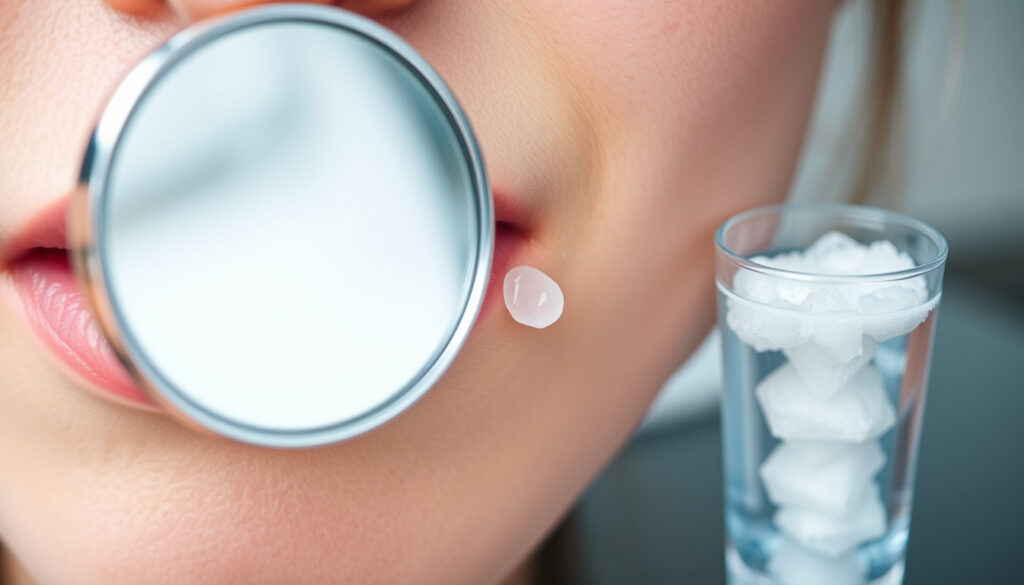
- Ice chips may reduce discomfort — Mayo Clinic
- Sore persists beyond 3 weeks — Mayo Clinic
- Extreme pain or spreading — Cleveland Clinic (Mayo Clinic)
- Accompanied by fever or swollen lymph nodes — Cleveland Clinic (Mayo Clinic)
Six key facts about canker sores, drawn from leading medical sources, are summarized below.
| Label | Value |
|---|---|
| Healing time | 7–14 days (Mayo Clinic) |
| Pain relief | Salt water rinse, OTC numbing gels (Cleveland Clinic) |
| Common cause | Minor injury, stress, acidic foods (Cleveland Clinic) |
| When to see doctor | Sore persists beyond 3 weeks (Mayo Clinic) |
| Contagious | Not contagious (Cleveland Clinic) |
| Typical treatment | Salt water rinse, topical gels, avoid irritants (Cleveland Clinic) |
How do you get rid of a canker sore fast?
When a canker sore strikes, the priority is reducing pain and inflammation quickly. Cleveland Clinic (leading hospital system) recommends a salt water rinse: mix 1/2 teaspoon of salt in a cup of warm water and swish for 15–30 seconds, repeating 4–5 times daily. This helps reduce bacteria and soothe the sore.
What cures a canker sore fast?
- Apply an over-the-counter topical gel containing benzocaine (brands like Anbesol or Orabase) directly to the sore — Cleveland Clinic
- Avoid spicy, acidic, or crunchy foods that can aggravate the ulcer — Mayo Clinic
- Ice chips placed over the sore can numb the area temporarily — Mayo Clinic
What heals a canker sore the fastest?
No single treatment guarantees healing in under 24 hours. However, Mayo Clinic (top U.S. medical institution) notes that topical products applied as soon as the sore appears may help relieve pain and speed recovery. Combining a salt water rinse with an OTC protective paste (like Orabase) provides a physical barrier that reduces irritation.
How can you get rid of a canker sore in 24 hours?
Realistically, a canker sore will not fully disappear in one day. But you can significantly reduce pain and inflammation. Start with a salt water rinse immediately, apply a benzocaine gel, and avoid any trigger foods. Rest and oral hygiene (with a soft-bristled toothbrush) also help. Cleveland Clinic (not-for-profit academic medical center) emphasizes that most sores need 7–14 days to heal.
For someone with a painful canker sore, the fastest route to relief isn’t a miracle cure — it’s a disciplined routine: rinse, apply gel, avoid irritants, and let your body’s natural healing process do its work.
Bottom line: Canker sore relief comes from consistent home care, not a single magic step. Use salt rinses and OTC numbing gels early, and protect the sore from irritation.
What are the causes of canker sores?
Cleveland Clinic (nationally ranked hospital) lists the most common triggers: minor injury (like biting your cheek), acidic or spicy foods, stress, and vitamin deficiencies (especially B12, folate, and iron). Hormonal shifts and certain food allergies may also play a role.
Are canker sores from poor hygiene?
- No — poor hygiene is not a direct cause — Cleveland Clinic
- Canker sores are not caused by bacteria or viruses in the usual sense — they are inflammatory ulcers — Mayo Clinic
- They are not contagious, unlike cold sores (herpes simplex) — Cleveland Clinic
Bottom line: Canker sores are an inflammatory response, not a sign of poor oral hygiene. Focus on reducing known triggers rather than scrubbing harder.
Does salt help a canker sore?
Yes — but it’s a symptomatic treatment, not a cure. Mayo Clinic (world-renowned medical center) endorses salt water rinses as a standard home remedy. The salt draws out fluid from the tissue, reducing inflammation and creating an environment less hospitable to bacteria.
How can you get rid of canker sores at home?
Home remedies beyond salt water include:
- Baking soda paste: Mix 1 teaspoon of baking soda with enough water to form a paste, apply to the sore, then rinse after 15 minutes — Mayo Clinic
- Honey or aloe vera: Both have anti-inflammatory properties, though evidence is limited — consult your dentist
- Milk of magnesia: Apply a small amount to the sore a few times a day — Mayo Clinic
How can you get rid of canker sores on the tongue?
Sores on the tongue are especially painful because the tongue moves constantly. Cleveland Clinic (trusted health system) advises using a salt water rinse 4–5 times daily and avoiding spicy or acidic foods. A topical gel like Anbesol can be applied directly, but you may need to dry the area first with a cotton swab. Ice chips can also provide targeted numbing.
For someone with a canker sore on the tongue, pain management is the top priority because every swallow aggravates the ulcer. Salt water rinses and ice are simple, effective first-line tools.
The implication: Consistent salt water rinses and ice offer quick comfort, but longer-term relief requires avoiding triggers and using topical treatments.
Can a canker sore heal in 2 days?
Mayo Clinic (prestigious research hospital) states that minor canker sores typically take 7–14 days to heal. While small superficial ones may resolve in a few days, a full recovery in 48 hours is uncommon. Treatments can shorten the duration but rarely to under 2 days.
What heals a canker sore the fastest?
The fastest healing happens when you intervene early. Mayo Clinic (leading U.S. hospital system) emphasizes starting topical treatments at the first tingle or redness. Combining a protective paste (Orabase) with a salt water rinse and avoiding irritants may shave a few days off the healing time.
Bottom line: Don’t expect a canker sore to vanish in 48 hours. Focus on symptom relief and let the body heal at its own pace.
Why do canker sores hurt so bad?
The pain comes from exposed nerve endings and the inflammatory response. Cleveland Clinic (not-for-profit medical center) explains that the ulcer’s surface is raw, and eating, talking, or even drinking water can cause sharp pain. The first 3–4 days are usually the worst; after that, inflammation subsides and pain decreases.
Does salt help a canker sore?
Yes — the salt water rinse can temporarily reduce inflammation and bacterial load, which lowers the pain signal. However, Mayo Clinic (world-class medical institution) notes that the relief is temporary. For longer-lasting pain control, an OTC numbing gel with benzocaine is more effective.
How can you get rid of canker sores at home?
Effective home management for pain includes:
- Salt water rinses every few hours
- Application of benzocaine gel as needed
- Soft, bland foods (yogurt, cream soup, mashed potatoes) — My Health Alberta (government health resource)
- Avoiding alcohol-based mouthwashes — Cleveland Clinic
If the pain is so severe that you cannot eat or drink, or if the sore doesn’t start improving after 7 days, see a doctor. Mayo Clinic (top-tier medical authority) advises that persistent ulcers need professional evaluation.
What this means: Pain management is key in the first few days, and home remedies can significantly reduce discomfort while the body heals.
Does Bonjela actually help?
Bonjela contains choline salicylate (a pain reliever) and cetalkonium chloride (an antiseptic). Colgate (dental health authority) includes it as one of the OTC options for canker sore relief. It can reduce pain and may slightly shorten healing time, but it’s not a cure.
How can you get rid of canker sores in the mouth?
For sores on the soft palate or inside the cheeks, the same routine applies: salt water rinse, protective gel, and avoid irritants. Cleveland Clinic (leading academic medical center) also recommends using a soft-bristled toothbrush to avoid further damage.
How can you get rid of canker sores on the lip?
Sores on the inner lip are common. Apply a paste of baking soda or a dab of honey directly, and keep the area clean. Mayo Clinic (renowned medical research institution) advises avoiding spicy foods and using a straw for cool drinks to bypass the sore.
How can you get rid of canker sores in the throat?
Throat ulcers are rarer and can be more painful. Mayo Clinic (internationally respected medical center) recommends gargling with a salt water solution (1/2 teaspoon salt in 1 cup warm water) or a baking soda rinse. Avoid hot, spicy, or acidic liquids. If the sore lasts more than 2 weeks or causes difficulty swallowing, see a doctor.
Step-by-Step: How to Get Rid of a Canker Sore Fast
- Rinse with salt water — Mix 1/2 teaspoon salt in 1 cup warm water; swish for 30 seconds. Repeat 4–5 times daily. (Cleveland Clinic)
- Apply a topical gel — Use a benzocaine product (Anbesol, Orabase) directly on the sore. Follow package directions. (Cleveland Clinic)
- Avoid trigger foods — Skip spicy, acidic, or crunchy items. Stick to soft, bland foods. (Mayo Clinic)
- Use ice if needed — Let an ice chip dissolve over the sore for temporary numbing. (Mayo Clinic)
- Keep the area clean — Brush gently with a soft toothbrush; avoid alcohol-based mouthwash. (Cleveland Clinic)
- Monitor healing — If no improvement after 7 days or sore lasts >3 weeks, consult a doctor. (Mayo Clinic)
The pattern: Following these steps consistently gives the best chance for quick relief and prevents further irritation.
Clarity: What we know and what remains unclear
Confirmed facts
- Canker sores are not contagious — Cleveland Clinic
- Salt water rinse provides symptomatic relief — Mayo Clinic
- Most heal in 1–2 weeks — Mayo Clinic
- Poor hygiene is not a direct cause — Cleveland Clinic
What’s unclear
- Exact reason some individuals are more prone
- Effectiveness of honey and other natural remedies lacks strong evidence
- Whether specific foods are definitive triggers for all people
“For most canker sores, home care — salt water rinses and over-the-counter gels — is enough. But if it’s unusually large, lasts more than three weeks, or comes with fever, see a dentist or doctor.”
— Mayo Clinic (leading medical center)
“Topical anesthetics such as Anbesol or Orabase can numb the area and make eating and talking more comfortable.”
“Salt water rinses help soothe mouth sores and may support faster healing.”
— Cleveland Clinic (nationally ranked hospital)
For anyone dealing with a painful canker sore, the path forward is clear: start with salt water rinses and an OTC numbing gel, avoid known irritants, and give your body time. If the sore persists beyond three weeks or the pain is extreme, professional evaluation is warranted. For the average patient, consistent home care can cut the discomfort significantly — even if the clock still needs to run its full 7–14 days.
For those dealing with painful ulcers specifically on the tongue, our detailed guide on canker sores on the tongue provides targeted treatment strategies and relief tips.
Frequently asked questions
Can stress cause canker sores?
Yes. Cleveland Clinic (leading medical institution) lists stress as a common trigger. Managing stress through relaxation or sleep may help reduce outbreaks.
Are canker sores hereditary?
There is evidence that a family history of canker sores increases your risk. Mayo Clinic (world-renowned medical center) notes that genetics can play a role in susceptibility.
Can toothpaste cause canker sores?
Some people find that toothpaste containing sodium lauryl sulfate (SLS) can trigger or worsen canker sores. Cleveland Clinic (trusted hospital system) suggests trying an SLS-free toothpaste if you are prone.
What vitamins help prevent canker sores?
Deficiencies in vitamin B12, folate, and iron are linked to recurrent canker sores. Cleveland Clinic (not-for-profit medical center) recommends checking levels if you have frequent outbreaks.
Can mouthwash help canker sores?
Alcohol-based mouthwash can sting and worsen irritation. Cleveland Clinic (nationally ranked hospital) advises avoiding them. A salt water or baking soda rinse is a better alternative.
How to differentiate a canker sore from oral cancer?
Mayo Clinic (prestigious medical institution) states that oral cancer lesions are usually painless at first, do not heal within 2 weeks, and may appear as red or white patches. Any sore that does not heal in 3 weeks should be examined by a dentist or doctor.
Does Bonjela help with canker sores?
Bonjela’s active ingredients (choline salicylate and cetalkonium chloride) provide temporary pain relief and antiseptic action. Colgate (dental health authority) includes it among OTC options, but it is not a substitute for good oral hygiene and avoidance of triggers.
More related posts
 Salem’s Lot (2024): Worth Watching? Review, Scares & Facts
 Sophia Katseye: Leader, Background, and Verified Facts (2025)
 Norman Reedus: Ethnicity, Daryl Dixon Sexuality & Family
 Kara Swisher: Biography, Wife, Politics, and Stroke
 Working at Heights Training – Complete 2025 Guide
 Bank of Canada Surveys: Outlook, Expectations & Rate Insights
 Is Pineapple Good for Dogs? Benefits, Risks & Safe Feeding
 Enercare Hot Water Tank: Rental, Buyout & Repair Guide