Margaret Thatcher: Biography, Policies, Controversy & Legacy
Few political leaders inspire the level of personal affection and anger that Margaret Thatcher still does, more than a decade after her death. During her 11 years as Britain’s first female prime minister, she enacted a sweeping set of reforms that transformed the country, though the full picture is often blurred by the strong emotions she still evokes.
Years as Prime Minister: 1979–1990 (Princeton University Department of History) ·
Total time in office: 11 years, 209 days (Wikipedia) ·
Nickname: Iron Lady (The Decision Lab)
Quick snapshot
- Thatcher was the first female UK Prime Minister (Princeton University)
- She served from 1979 to 1990 (Princeton University)
- Her cause of death was a stroke (Wikipedia)
- Her son Mark went missing in 1984 and was found safe (Wikipedia)
- The exact nature of Queen Elizabeth II’s personal feelings toward Thatcher is not publicly documented beyond reports of strain (Wikipedia)
- Whether Thatcher’s economic policies overall helped or harmed the UK is debated; no consensus exists (Oxford Academic / Cambridge Journal of Economics)
- 1979: Becomes Prime Minister (Princeton University)
- 1982: Falklands War (Wikipedia)
- 1990: Resigns after leadership challenge (Wikipedia)
- Debate over her legacy continues to shape Conservative Party identity (Wikipedia)
- New biographies and reassessments appear regularly, each offering different verdicts (Oxford Academic)
Seven key biographical details define the shape of Thatcher’s life and career.
| Attribute | Value |
|---|---|
| Full name | Margaret Hilda Thatcher |
| Born | October 13, 1925 |
| Died | April 8, 2013 |
| Political party | Conservative |
| Spouse | Denis Thatcher (m. 1951–2003) |
| Children | Carol and Mark Thatcher |
| Education | Somerville College, Oxford (Chemistry, then Law) |
What is Margaret Thatcher best known for?
First female UK Prime Minister
- Thatcher was the first woman to serve as British Prime Minister, taking office in 1979 (Princeton University Department of History).
- She served continuously for 11 years and 209 days, the longest continuous tenure since Lord Liverpool (Wikipedia).
Being the first female PM gave Thatcher a unique visibility, but it also meant every move was scrutinised through a gender lens that her male predecessors never faced.
What this means: Being the first female PM gave Thatcher a unique visibility, but it also meant every move was scrutinised through a gender lens that her male predecessors never faced.
Thatcherism and economic reforms
- Her policy mix, known as Thatcherism, included privatising state-owned industries, deregulating financial markets, and reducing union power (The Decision Lab).
- A 40-year reassessment in the Cambridge Journal of Economics argues these policies changed the economic and social outlook of the UK but failed to deliver on Thatcher’s own stated moral and economic goals (Oxford Academic).
Thatcher promised a return to personal responsibility, but the same research concludes that her approach replaced universal social security commitments with targeted support for the working poor and labor-market activation policies.
Falklands War leadership
- In 1982, Argentina invaded the Falkland Islands; Thatcher authorised a military task force that retook the islands after a two-month conflict (Wikipedia).
- The victory boosted her domestic popularity and strengthened her international stature (Wikipedia).
The implication: Thatcher’s crisis management in the Falklands cemented her reputation as a decisive leader, but it also set a precedent for using military force to project national resolve.
What did Margaret Thatcher do that was controversial?
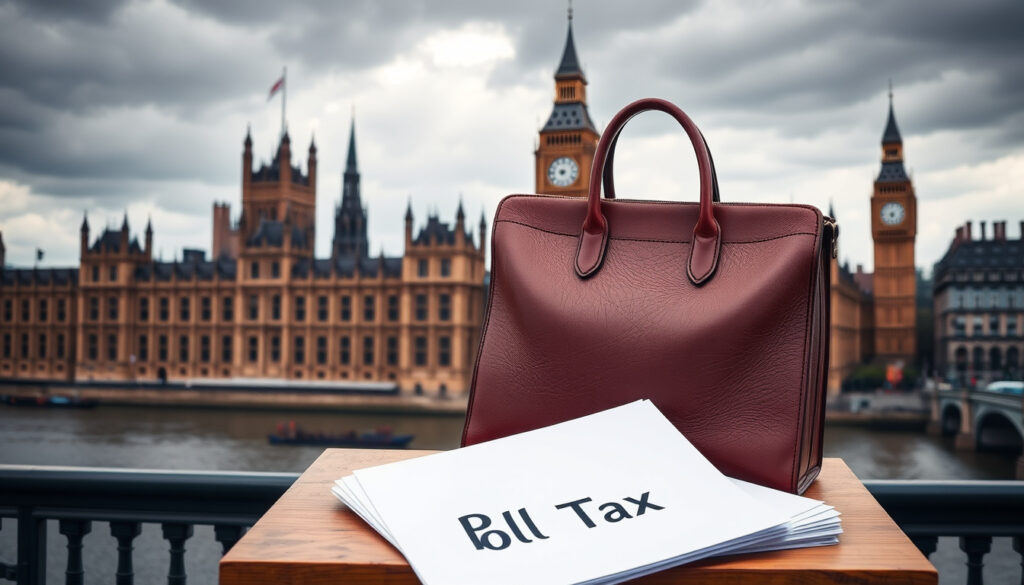
Poll Tax riots
- The Community Charge (poll tax) replaced local rates with a flat per-person tax, sparking widespread protests in 1990 (Wikipedia).
- Riots in London turned violent, and the tax became one of the main reasons for her declining popularity (Wikipedia).
Mining strikes and union crackdowns
- The 1984–85 miners’ strike ended after a bitter standoff; Thatcher’s government stockpiled coal to withstand the stoppage (Wikipedia).
- Violent clashes between pickets and police became iconic images of the era (Wikipedia).
Social welfare cuts
- Her government cut social housing spending and tightened welfare eligibility, which critics say increased inequality (Oxford Academic).
- According to Socialist Alternative, unemployment rose from 1.5 million in 1979 to 3.5 million by 1984 (Socialist Alternative).
What caused the downfall of Margaret Thatcher?
Leadership challenge and resignation
Thatcher resigned on November 28, 1990, after failing to win a leadership challenge against Michael Heseltine (Wikipedia).
Poll tax backlash
The poll tax was a major factor in her declining popularity among Conservative MPs (Wikipedia).
European integration disagreements
Her eurosceptic stance caused internal party splits, and she became increasingly isolated within her own cabinet (Wikipedia).
The implication: Thatcher’s rigid positions on Europe and the poll tax eroded the confidence of her own party, leading to a sudden exit after more than 11 years in power.
What was Margaret Thatcher suffering from?
Dementia and later life health
- Carol Thatcher revealed that her mother had dementia in her final years (Wikipedia).
- Thatcher died on April 8, 2013, from a stroke (Wikipedia).
What this means: The health decline of a once-dominant figure humanises a legacy often reduced to political slogans, reminding us that leaders are mortal.
Was Thatcher a good or bad PM?
Economic record
- Supporters credit her with reviving the UK economy through deregulation and privatisation (The Decision Lab).
- Critics point out that unemployment did not fall below its May 1979 level during her tenure (Wikipedia).
Social impact
Her policies are described as replacing universal social security commitments with targeted support for the working poor (Oxford Academic).
Global standing
Thatcher was a key ally of US President Ronald Reagan, and together they pushed for free-market reforms worldwide (Wikipedia).
Six points of comparison, one pattern: the same policies that won international admiration at home deepened divisions.
| Aspect | Supporters’ view | Critics’ view |
|---|---|---|
| Economic growth | Deregulation encouraged entrepreneurship (Decision Lab) | Growth came at the cost of rising inequality (Oxford Academic) |
| Unemployment | Long-term restructuring eventually created jobs (Wikipedia) | Unemployment tripled to 3.5 million by 1984 (Socialist Alternative) |
| Union power | Reduced strike disruption and improved productivity (Decision Lab) | Crushed worker rights and collective bargaining (Wikipedia) |
| Privatisation | Efficiency gains from private ownership (Wikipedia) | Sold off public assets cheaply, benefiting the wealthy (Oxford Academic) |
| Social services | Targeted welfare reduced dependency (Oxford Academic) | Housing and benefit cuts increased homelessness and poverty (Wikipedia) |
| International standing | Restored Britain’s influence globally (Wikipedia) | Aligned UK too closely with US Cold War policies (Wikipedia) |
The trade-off: Thatcher’s supporters gained a dynamic economy, but her critics saw a society where the safety net had been torn, leaving millions exposed.
Why was Margaret Thatcher known as the Iron Lady?
Origin of the nickname
The nickname “Iron Lady” was coined by a Soviet journalist in 1976 for her staunch anti-communism (Wikipedia). Thatcher embraced the label as a sign of strength.
Cold War context
During the Cold War, her firm stance against the Soviet Union resonated with Western allies and helped define her international image (The Decision Lab).
The catch: the same unyielding attitude that earned her global respect also contributed to her inability to compromise at home, ultimately leading to her downfall.
Was Margaret Thatcher’s son found alive?
Mark Thatcher’s disappearance in 1984
Her son Mark Thatcher went missing during the 1984 Paris–Dakar rally (Wikipedia).
Outcome of the search
He was found safe after a six-day search (Wikipedia).
The pattern: The incident humanized Thatcher, showing a personal side beneath the Iron Lady facade, though the media scrutiny also highlighted the privileges of political families.
Upsides of Thatcher’s premiership
- Privatisation increased efficiency in several industries (Wikipedia)
- Trade union reforms reduced strike days dramatically (Decision Lab)
- Deregulation of the London Stock Exchange in 1986 boosted financial services (Socialist Alternative)
- Home ownership rose through the Right to Buy scheme (Wikipedia)
Downsides of Thatcher’s premiership
- Unemployment rose and remained high throughout most of her term (Wikipedia)
- Social housing cuts led to increased homelessness (Oxford Academic)
- The poll tax proved deeply unfair and sparked violent protests (Wikipedia)
- Critics say she encouraged a culture of greed and selfishness (Wikipedia)
Timeline of Margaret Thatcher’s life
- – Born in Grantham, England (Wikipedia)
- – Elected as MP for Finchley (Wikipedia)
- – Becomes leader of the Conservative Party (The Decision Lab)
- – Becomes Prime Minister after election victory (Princeton University)
- – Falklands War (Wikipedia)
- – Survives Brighton hotel bombing by IRA (Wikipedia)
- – Miners’ strike (Wikipedia)
- – Poll tax riots; resigns as Prime Minister (Wikipedia)
- – Dies from stroke (Wikipedia)
What remains confirmed and what is still debated?
Confirmed facts
- Thatcher was the first female UK Prime Minister. (Princeton University)
- She served from 1979 to 1990. (Princeton University)
- Her cause of death was a stroke. (Wikipedia)
- She had dementia in later years. (Wikipedia)
- Her son Mark went missing in 1984 and was found safe. (Wikipedia)
What remains unclear
- The exact nature of Queen Elizabeth II’s personal feelings toward Thatcher is not publicly documented beyond reports of strain. (Wikipedia)
- Whether Thatcher’s economic policies overall helped or harmed the UK is debated; no consensus exists. (Oxford Academic)
Voices on Thatcher
“I am in politics because of the conflict between good and evil, and I believe that in the end good will triumph.”
— Margaret Thatcher, quoted in Wikipedia
“She is a great leader, a great friend, and a great lady.”
— Ronald Reagan, quoted in Wikipedia
“She has no sense of compassion.”
— Neil Kinnock, Labour leader, quoted in Wikipedia
“She had dementia in her final years.”
— Carol Thatcher, quoted in Wikipedia
More than a decade after her death, Margaret Thatcher remains a fault line in British politics. For Conservative voters still debating the direction of their party, the choice is clear: embrace the market-driven model she championed, or carve a more interventionist path that acknowledges the costs of that transformation.
For a comprehensive overview of her life and political impact, see Margaret Thatchers biography and policies.
Frequently asked questions
What were Margaret Thatcher’s main achievements?
She was the first female UK Prime Minister, privatised major industries, deregulated financial markets, and successfully led the Falklands War (Wikipedia).
What was the Poll Tax and why was it controversial?
The Community Charge (poll tax) replaced local rates with a flat per-person tax, sparking widespread protests and riots in 1990 (Wikipedia).
How long was Margaret Thatcher Prime Minister?
She served 11 years and 209 days, from 1979 to 1990 (Wikipedia).
What is Thatcherism?
A set of policies including privatisation, deregulation, tax cuts, and union curbs, aimed at reversing the post-war consensus (The Decision Lab).
Did Margaret Thatcher have any children?
Yes, twins Carol and Mark Thatcher (Wikipedia).
Where is Margaret Thatcher buried?
She is buried at the Royal Hospital Chelsea, London (Wikipedia).
What was Margaret Thatcher’s relationship with the Queen?
Reports suggest the relationship was strained at times, though the exact nature of their personal feelings is not publicly documented (Wikipedia).
Why did the Queen dislike Margaret Thatcher?
Reports suggest the relationship was strained at times over political and social issues, though the exact nature of their personal feelings is not publicly documented (Wikipedia).
More related posts
 Best Time to Take Magnesium – Optimal Morning or Night Guide
 Hot Yoga Near Me – Top PNW Studios and Beginner Guide
 Mel Gibson Biography: Career, Scandals, and Comeback
 AI 185 Flight Status – Live Tracking and Delay Insights
 Emma Thompson: Relationships, Children, and Career Facts
 Mark Normand: Wife, Sobriety, Net Worth, and Career Facts
 Lance Armstrong: Doping Scandal, Stripped Titles, Life Now
 How to Use ChatGPT: Step-by-Step Guide for Beginners